

Why Yeast Matters So Much in Commercial Brewing
Yeast is one of the most consequential decisions on your ingredient list — and one of the most misunderstood. Get it right, and your fermentation is clean, consistent, and on schedule. Get it wrong, and you're looking at off-flavors, stuck fermentations, and batches that don't represent your brewery the way you intended.
This guide covers everything a startup or mid-scale microbrewery needs to know: what pitch rate actually means, how to calculate yeast quantities per barrel, how ale and lager requirements differ, and how professional repitching practices can reduce your yeast costs dramatically over time.
What This Guide Covers
- Pitch rate basics — what million cells/mL/°P actually means
- How much yeast per barrel — by slurry volume, weight, and cell count
- Dry vs liquid yeast — commercial-scale differences
- Repitching programs — how breweries cut yeast cost over time
- Batch-size references — practical slurry estimates from 1 BBL to 15 BBL
What Is a Yeast Pitch Rate — and Why Does It Matter?
Pitch rate refers to the number of yeast cells you add to your wort at the start of fermentation, expressed relative to the volume and gravity of that wort. The standard unit used across the commercial brewing industry is million cells per milliliter of wort per degree Plato (°P).
The reason pitch rate matters so much is that yeast doesn't just ferment — it also grows. During that growth phase, the yeast produces many of the flavor and aroma compounds that define your beer. Pitch too few cells and you increase stress and off-flavor risk. Pitch too many and you suppress growth, changing the beer's character in the opposite direction.
The sweet spot between those two extremes is what professional brewers spend years refining.
The Standard Commercial Pitch Rate
The industry-standard benchmark used by commercial breweries worldwide is:
1 million cells per milliliter of wort per degree Plato (°P)
In practice, however, breweries adjust from that benchmark depending on beer type and fermentation temperature:
- Ales: commonly pitched at 0.75 million cells/mL/°P
- Standard lagers: commonly pitched at 1.0 million cells/mL/°P
- High-gravity beers and cold-pitched lagers: often require 1.5 million cells/mL/°P or higher
Because ales ferment warm, yeast is naturally more active and requires less inoculation. Lagers ferment cold, which slows yeast metabolism significantly, so lager brewing reliably requires a higher pitch rate than ale brewing.
How Much Yeast Per Barrel? A Commercial Brewery Reference
This is the practical question most microbrewery operators need answered. Here is a direct breakdown based on widely used professional guidelines.
Pitching by Volume (Yeast Slurry)
| Beer Style / Gravity | Yeast Slurry Per Barrel (31 gal) |
|---|---|
| Ales & wheat beers (standard gravity) | 0.3 – 0.5 gallons per barrel |
| Ales (higher gravity, above 17°P) | 0.6 – 0.8 gallons per barrel |
| Lagers (cold pitch ~50°F) | 0.6 – 1.0 gallons per barrel |
Practical example: for a 10-barrel batch of standard-gravity ale, you'd pitch approximately 3–5 gallons of healthy yeast slurry.
Pitching by Weight
| Beer Style / Gravity | Yeast Weight Per Barrel |
|---|---|
| Standard gravity ales (up to 17°P) | 2.6 – 4.4 lbs (1.2 – 2 kg) per BBL |
| Higher gravity beers (above 17°P) | Higher rates apply |
Practical example: for a 10-barrel standard ale batch, expect to pitch 26–44 lbs (11.8–20 kg) of yeast slurry.
Pitching by Cell Count (Most Precise Method)
| Beer Style / Gravity | Cell Count Per Barrel |
|---|---|
| Standard gravity beers (up to 17°P) | 1.2 – 1.5 trillion cells per BBL |
| High gravity beers (above 17°P) | 2.3 – 2.5 trillion cells per BBL |
Practical example: a 10-barrel standard ale requires 12–15 trillion total yeast cells at pitching.
Dry Yeast vs. Liquid Yeast at Commercial Scale
Dry Yeast
Dry yeast packets contain approximately 18–20 billion cells per gram. A standard 11.5-gram packet holds roughly 200+ billion cells, more than a single liquid yeast vial. At commercial scale, dry yeast is typically purchased in bulk and is especially useful for smaller nano and startup breweries.
The general commercial guideline is approximately 1 gram of dry yeast per liter of wort, which translates to around 117 grams per barrel.
- 5-barrel batch: roughly 585 grams (~1.3 lbs)
- 10-barrel batch: roughly 1,170 grams (~2.6 lbs)
Dry yeast offers long shelf life, consistent cell counts, and lower initial cost per batch.
Liquid Yeast
Liquid yeast offers greater strain variety and is the format of choice for breweries prioritizing flavor authenticity and repitching programs. A single fresh liquid yeast pitch from a commercial supplier suitable for a 10-barrel batch can cost $300–$800 depending on the strain and supplier.
That is why almost all commercial breweries repitch yeast — using harvested yeast from a completed fermentation to start the next batch.
Yeast Repitching: How Commercial Breweries Reduce Yeast Costs Dramatically
One of the most important practices separating efficient commercial breweries from expensive ones is a disciplined yeast repitching program. The math is compelling: the cost of a single fresh lab pitch for a 10-barrel brewery, averaged across 7–10 repitch generations, drops to approximately $35–$45 per batch.
How Repitching Works
After fermentation is complete, healthy yeast settles to the cone of your commercial conical fermenter. This yeast is harvested, stored, and used to inoculate the next batch.
- Cold crash first. Drop fermenter temperature to 34–40°F (1–4°C) before harvesting.
- Harvest within the right window. Collect yeast 24–72 hours after reaching cold crash temperature.
- Pitch at a higher rate when repitching. Repitched yeast is less vigorous than fresh lab-grown culture.
- Use your nose and eyes. Healthy harvested yeast should be cream/tan colored and smooth.
- Track generations carefully. Most strains can be reliably repitched 5–10 generations.
Slurry Density Reference
A healthy yeast slurry at 40–60% solids typically contains approximately 1.2 billion cells per mL. Knowing your slurry density allows you to calculate pitch volume accurately even without a hemocytometer.
How Wort Gravity Changes Your Yeast Requirements
Gravity is the single biggest variable in determining how much yeast a batch needs. The higher the original gravity, the more fermentable sugar the wort contains — and the harder the yeast has to work to convert it.
This is why the standard pitch rate formula is expressed per degree Plato rather than just per volume. A high-gravity beer needs significantly more yeast than a session-strength beer, even if the batch volumes are identical.
| Original Gravity | Approximate °Plato | Recommended Pitch Rate |
|---|---|---|
| 1.030 – 1.050 | 7.5 – 12.5°P | 0.5 – 0.75 million cells/mL/°P |
| 1.050 – 1.070 | 12.5 – 17°P | 0.75 – 1.0 million cells/mL/°P |
| 1.070 – 1.100 | 17 – 24°P | 1.0 – 1.5 million cells/mL/°P |
| 1.100+ | 24°P+ | 1.5+ million cells/mL/°P |
For lagers, apply these rates at roughly 1.5–2x the ale equivalent for the same gravity range.
What Happens When You Under-Pitch?
- Diacetyl — buttery or butterscotch off-flavors
- Fusel alcohols — harsh, hot, solvent-like notes
- Sulfur compounds — especially problematic in lagers
- Unwanted esters
- Stuck or incomplete fermentation
What Happens When You Over-Pitch?
- Flat ester profile
- Thin body and mouthfeel
- Autolysis risk from excess old yeast cells
- Lower viability yeast for repitching
How Commercial Breweries Monitor Yeast Health
Professional breweries that repitch regularly invest in basic yeast lab capabilities to maintain quality and catch problems before they affect production.
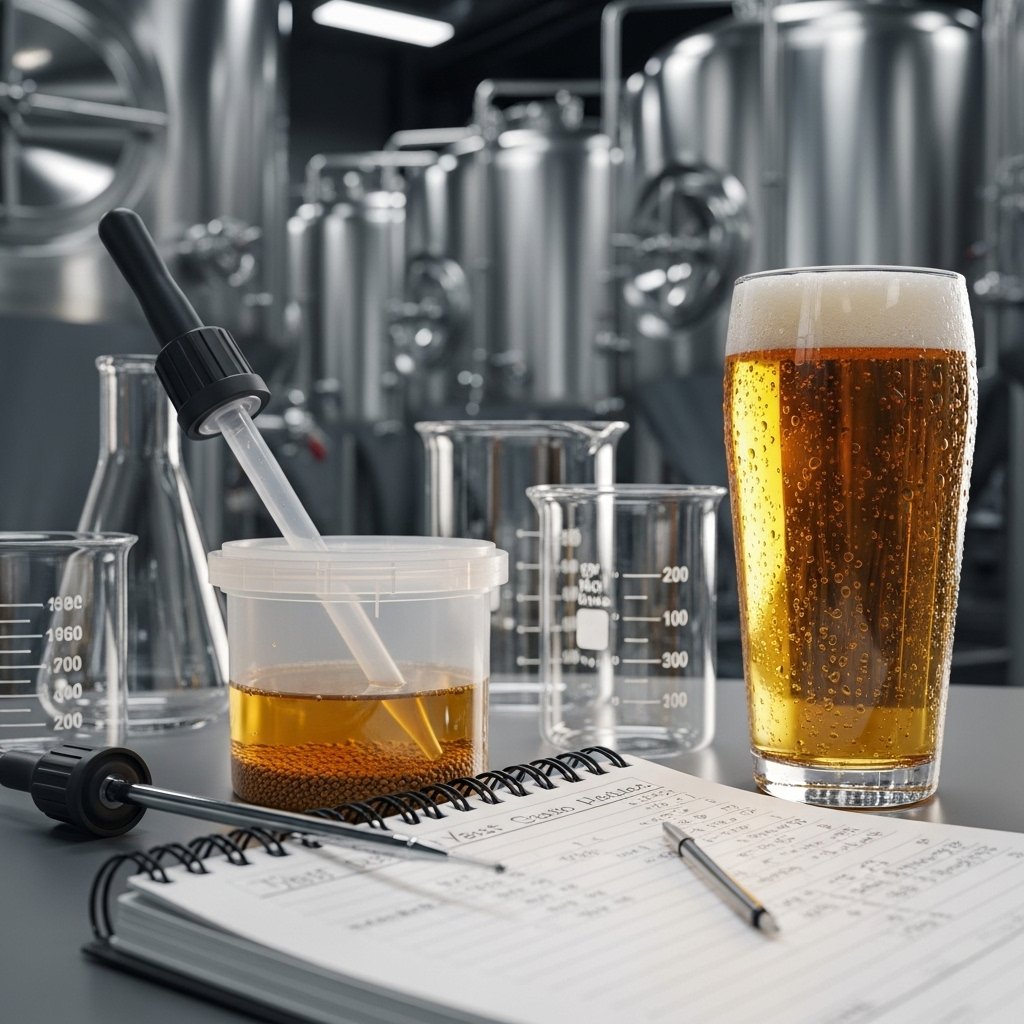
- Hemocytometer counting: the most accurate way to calculate real cell density before pitching
- Methylene blue viability staining: gives a quick viability percentage for harvested yeast
- Microscopic inspection: helps catch bacterial contamination or wild yeast before it affects a batch
For startup breweries without lab equipment, pitching by volume or weight using established slurry density benchmarks gets you close enough to maintain consistent fermentations as you build your process.
Practical Yeast Calculator Reference by Batch Size
Use this quick-reference table to estimate your starting yeast requirements for standard ale brewing. These figures assume repitched slurry at 40–60% solids and a standard gravity wort (1.050–1.065).
| Batch Size | Slurry Volume | Slurry Weight |
|---|---|---|
| 1 BBL (31 gal) | 0.3 – 0.5 gal | 2.6 – 4.4 lbs |
| 3 BBL | 0.9 – 1.5 gal | 7.8 – 13.2 lbs |
| 5 BBL | 1.5 – 2.5 gal | 13 – 22 lbs |
| 7 BBL | 2.1 – 3.5 gal | 18.2 – 30.8 lbs |
| 10 BBL | 3.0 – 5.0 gal | 26 – 44 lbs |
| 15 BBL | 4.5 – 7.5 gal | 39 – 66 lbs |
For lagers, double these volumes. For high-gravity beers above 17°P, use the upper end of the range or increase by 50%.
The Right Fermenter Makes Yeast Management Easier
How well you can manage your yeast program is directly connected to your equipment. Commercial conical fermenters with a proper cone angle, temperature jacketing, and a calibrated dump valve allow you to cold crash effectively, harvest cleaner yeast, and maintain the consistency that professional repitching requires.
At Commercial Brewing System, our commercial conical fermenters are engineered for this kind of production discipline. If you're building out your microbrewery, it's worth seeing how fermenter choice affects your yeast program long before you brew your first commercial batch.
You can also explore our turnkey brewing systems — complete, matched setups for startup microbreweries that include fermentation equipment sized and integrated for consistent, repeatable production from day one.
Frequently Asked Questions
How much yeast is needed to brew 1 barrel of beer commercially?
For a standard-gravity ale around 1.050–1.065, a commercial brewery typically pitches 0.3–0.5 gallons (2.6–4.4 lbs) of healthy yeast slurry per barrel of wort. For lagers or high-gravity beers, this often doubles to 0.6–1.0 gallons per barrel.
What is the standard commercial pitch rate for beer?
The industry standard is 1 million cells per milliliter of wort per degree Plato (°P) for repitched yeast. Most ale brewers use lower rates for standard ales, while lagers use higher rates depending on fermentation temperature.
How many generations can you repitch commercial yeast?
Most strains can be reliably repitched 5–10 generations with proper harvesting, storage, and quality monitoring. Beyond that, viability declines and contamination risk increases.
Can you use dry yeast in a commercial brewery?
Yes. High-quality dry yeast is used by many startup and small commercial breweries. A common commercial guideline is roughly 1 gram of dry yeast per liter of wort, or about 117 grams per barrel.
What happens if you under-pitch yeast in a commercial brewery?
Under-pitching causes yeast stress during excessive cell growth and can produce diacetyl, sulfur, fusel alcohols, unwanted esters, and in severe cases, stalled fermentation.
What is the difference between pitch rate for ales vs. lagers?
Ales ferment warm, so yeast is naturally more active and needs a lower pitch rate. Lagers ferment cold, which suppresses yeast metabolism, so lagers typically require roughly twice the pitch rate of ales.
Summary: Commercial Yeast Pitch Rate at a Glance
| Brewing Scenario | Recommended Pitch Rate | Slurry Per Barrel |
|---|---|---|
| Standard ales (fresh lab culture) | 0.5 million cells/mL/°P | ~0.25 gal/BBL |
| Standard ales (repitched slurry) | 0.75 – 1.0 million cells/mL/°P | 0.3 – 0.5 gal/BBL |
| Lagers (warm pitch) | 1.0 million cells/mL/°P | 0.5 – 0.6 gal/BBL |
| Lagers (cold pitch ~50°F) | 1.5 million cells/mL/°P | 0.6 – 1.0 gal/BBL |
| High gravity beers (17°P+) | 1.5+ million cells/mL/°P | 0.6 – 0.8+ gal/BBL |
Ready to Build a Brewery That Brews Consistently?
Understanding pitch rate is one piece of the puzzle. The other is having fermentation equipment that makes consistent yeast management possible — properly sized cones, reliable temperature control, and the right capacity for your production goals.
